

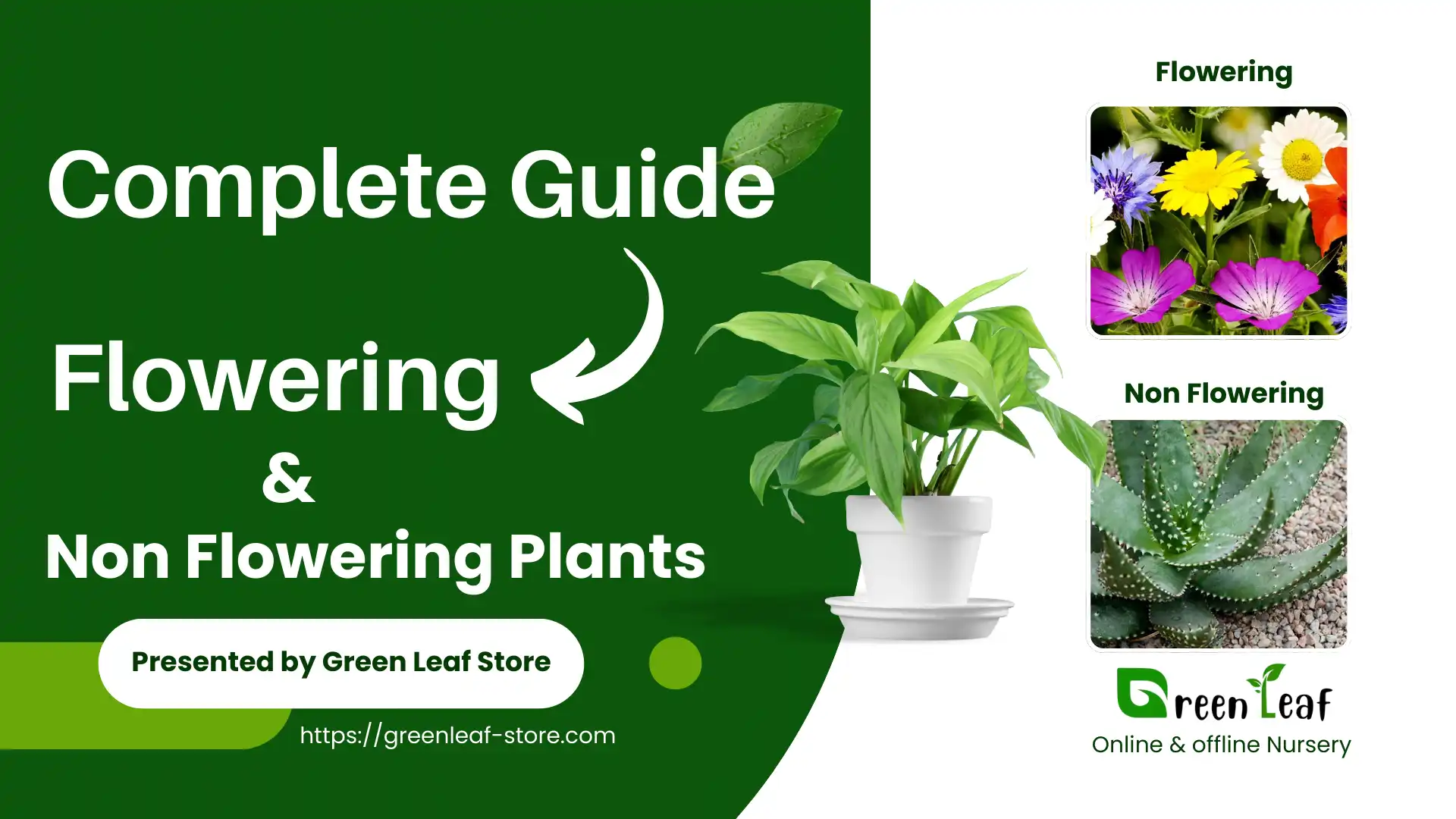
Plants are the base of life. They give us food, oxygen, shade, and beauty. Without plants, life on Earth would not exist. If we look closely, we see that not all plants are the same. Some grow colorful flowers, while others grow silently without any blossoms. These two broad groups are known as flowering and non flowering plants.
In schools, many students first hear this question: “What are flowering plants and non flowering plants?” The answer is simple, yet very interesting. Understanding this difference helps us know how plants grow, how they reproduce, and how they fit into our environment.
In this guide, we will explore both types of plants in detail, with examples you can find easily in Pakistan. Whether you are a student, a gardener, or just someone curious about nature, this blog will give you clear knowledge in simple words.
What Are Flowering Plants?
Flowering plants, also called angiosperms, are the plants that grow flowers. These flowers are not just for beauty — they are the main way for the plant to reproduce. Inside the flowers, there are special parts that help in making seeds. Once the seeds are formed, they can grow into new plants.
Key Features of Flowering Plants
- Flowers for reproduction – They use flowers to make seeds.
- Fruits and seeds – Seeds are often protected inside fruits (like mango, guava, or orange).
- Wide variety – They are the largest group of plants on Earth, with more than 300,000 species.
- Found everywhere – From deserts to mountains, flowering plants can grow almost anywhere.
Examples of Flowering Plants in Pakistan
Pakistan is blessed with a wide range of climates, so you can see flowering plants in every part of the country.
- Roses – Common in gardens and parks.
- Jasmine (Chambeli) – The national flower of Pakistan, loved for its fragrance.
- Sunflowers – Grown for beauty as well as seeds and oil.
- Mango trees – Famous fruit tree, with beautiful yellow-white flowers before fruits.
- Mustard plants (Sarson) – Bright yellow flowers seen in Punjab fields.
- Bougainvillea – A common ornamental plant with purple and pink flowers.
These are just a few, but almost every garden, park, and farm in Pakistan is filled with flowering plants.
Types of Flowering Plants
Flowering plants are not all the same. They can be divided into two main groups:
1. Monocots
- Seeds have one cotyledon (seed leaf).
- Leaves usually have parallel veins.
- Examples: wheat, rice, maize, sugarcane, and lilies.
2. Dicots
- Seeds have two cotyledons.
- Leaves usually have net-like veins.
- Examples: roses, peas, mango, guava, mustard.
This division is important for farmers and students, because it helps in understanding how crops grow and how they should be cultivated.
Importance of Flowering Plants in Our Lives
Flowering plants are not just for decoration. They play a huge role in human life and the environment.
- Food source – Most fruits, vegetables, and grains come from flowering plants.
- Oxygen – Like all plants, they release oxygen during photosynthesis.
- Beauty and culture – Roses, jasmine, and marigolds are part of Pakistani culture, used in weddings and festivals.
- Medicines – Neem, tulsi, and hibiscus have healing properties.
- Economic value – Mangoes, cotton, and wheat are major contributors to Pakistan’s economy.
What Are Non Flowering Plants?
Not all plants show bright, colorful flowers. Some plants never produce flowers in their entire life cycle. These are known as non flowering plants. Instead of flowers, they use other parts like spores, cones, or simple cell division to reproduce.
When people ask “What are flowering plants and non flowering plants?”, the clearest difference is this:
- Flowering plants use flowers to make seeds.
- Non flowering plants do not make flowers; they use different methods to grow new plants.
Features of Non Flowering Plants
- No flowers – They reproduce without flowers.
- Spores or cones – Many grow through spores (like mosses and ferns), while some use cones (like pine trees).
- Simple structure – Some are very simple (like algae), while others are large trees (like conifers).
- Ancient plants – Non flowering plants are some of the oldest plants on Earth, existing for millions of years.
Examples of Non Flowering Plants in Pakistan
Pakistan’s diverse landscape is home to many non flowering plants. Some are very common and can be spotted easily:
- Mosses – Found in damp, shady areas like near rivers, hills, and moist gardens.
- Ferns – Grow well in shady, moist areas like Murree and northern Pakistan.
- Algae – Seen in ponds, canals, and lakes. Green scum on water is often algae.
- Conifers (Pine, Deodar, Fir) – Tall trees found in the northern mountains.
- Cycads – Rare plants but grown in some gardens as decorative plants.
These plants may not look as attractive as roses or jasmine, but they play an important role in nature.
Types of Non Flowering Plants
1. Algae
- Very simple plants, found mostly in water.
- Can be green, red, or brown.
- Provide food for fish and aquatic life.
- Example in Pakistan: Green algae in ponds and rice fields.
2. Mosses
- Tiny, soft green plants that grow in damp places.
- They do not have true roots, stems, or leaves.
- Seen on walls, rocks, and moist soils in hilly areas.
3. Ferns
- Larger than mosses, with beautiful feathery leaves.
- Reproduce by spores found on the underside of leaves.
- Common in Murree and northern valleys.
4. Gymnosperms (Conifers)
- Large trees that make seeds inside cones, not flowers.
- Examples: pine, deodar, spruce.
- Found in northern Pakistan (Swat, Gilgit, Murree).
- Provide timber, resin, and help prevent soil erosion.
Importance of Non Flowering Plants
Though they don’t make flowers, these plants are very useful for both humans and the environment.
- Oxygen producers – Algae in oceans and lakes produce a huge amount of Earth’s oxygen.
- Soil protection – Mosses and ferns protect soil from erosion.
- Timber and wood – Conifers like pine and deodar provide valuable wood.
- Medicinal uses – Some ferns and mosses are used in traditional medicine.
- Decorative value – Ferns and cycads are popular in gardens and homes.
Difference Between Flowering and Non-Flowering Plants
| Feature | Flowering Plants (Angiosperms) | Non-Flowering Plants (Gymnosperms & Others) |
| Reproduction | Through flowers and seeds inside fruits | Through spores or cones |
| Examples in Pakistan | Jasmine, mango, wheat, cotton, rose | Pine, moss, ferns, algae |
| Uses | Food, fruits, medicine, decoration, oxygen | Timber, medicine, soil protection, oxygen |
| Cultural Role | Weddings, Eid, Mehndi, garlands | Historical architecture, wood for mosques |
Role of Flowering Plants and Non Flowering Plants in Pakistan
Pakistan’s agriculture and environment depend heavily on both flowering plants and non flowering plants. Each group contributes in its own way, and together they shape the country’s economy, ecosystem, and culture.
Contribution of Flowering Plants
Flowering plants form the backbone of Pakistan’s agriculture:
- Food crops – Wheat, rice, maize, and sugarcane feed the population.
- Fruit trees – Mango, guava, orange, banana, and apple depend on flowers to grow fruits.
- Oil seeds – Sunflower and mustard produce cooking oil.
- Cash crops – Cotton, a flowering plant, is one of Pakistan’s biggest exports.
These plants not only provide food and raw materials but also support millions of livelihoods across the country.
Contribution of Non Flowering Plants
Non flowering plants, though less colorful, play a vital role in Pakistan’s natural balance:
- Conifer forests – Pine and deodar in the north protect soil from erosion and provide timber.
- Algae in water – Release oxygen, support fish, and naturally clean water.
- Mosses and ferns – Grow in moist soil, keep land fertile, and prevent landslides in hilly areas.
- Cultural uses – Ferns and cycads are grown in homes and gardens for decoration and greenery.
These plants ensure environmental protection, soil health, and clean water — benefits that flowering plants alone cannot provide.
Environmental Benefits of Plants
Plants are not just important for food and beauty — they are the lifeline of our environment. From the air we breathe to the water we drink, plants keep nature balanced in many ways:
Oxygen Production
Through the process of photosynthesis, plants take in carbon dioxide and release oxygen. This natural cycle refreshes the air and makes it breathable for humans and animals. Without plants, life on Earth would struggle to survive.
Carbon Storage
Trees and other plants act as natural air filters. They absorb harmful carbon dioxide from the atmosphere and store it in their stems, leaves, and roots. This reduces air pollution and helps fight global warming.
Habitat for Wildlife
Plants create homes and food sources for countless living creatures. Birds build nests in trees, insects pollinate flowers, and animals depend on forests for shelter. A single tree can host hundreds of species, keeping biodiversity alive.
Role in the Water Cycle
Forests and green cover help in maintaining rainfall patterns and recharging groundwater. Plants capture rainwater, reduce floods, and slowly release moisture into the air. This balance keeps rivers flowing and underground water available for people and farms
Cultural and Traditional Value of Plants in Pakistan
Plants are not only a source of food and oxygen — in Pakistan, they also hold a deep cultural, traditional, and emotional value. From celebrations to heritage, flowering and non flowering plants are woven into daily life.
Flowering Plants in Traditions
Flowering plants are an essential part of Pakistani culture. Jasmine, the national flower of Pakistan, is widely used in garlands and decorations at weddings, Eid celebrations, and other festivals. Roses and marigolds are offered in religious places, placed on graves, and gifted as symbols of love and respect. Their fragrance and beauty make special occasions more colorful and meaningful.
Non Flowering Plants and Heritage
Non flowering plants, especially pine and deodar trees, hold strong historical value. In the northern regions, ancient mosques, shrines, and houses were built using conifer wood because of its strength and durability. Even today, many traditional wooden structures in Swat, Chitral, and Gilgit-Baltistan remind us of this cultural heritage. These trees are not just part of the landscape but also part of Pakistan’s architectural history.
Plants in Herbal Medicine
Herbal medicine, known as Tibb-e-Unani in Pakistan, relies on both flowering and non flowering plants. Tulsi, neem, aloe vera, and hibiscus are flowering plants often used in traditional remedies, while non flowering plants like certain ferns and mosses are valued for their healing properties. Local hakeems (herbal doctors) still prescribe plant-based treatments, showing how deeply plants are connected to health and culture in Pakistan.
GreenLeaf Store and Plant Awareness
In today’s modern world, fewer people spend time with nature. Cities are filled with concrete, and gardens are shrinking. This is why platforms like Green Leaf Store play an important role.
GreenLeaf Store helps people in Pakistan explore, buy, and understand plants — whether flowering or non flowering. By bringing plants closer to homes and offices, the store spreads awareness about why greenery is important for a healthy lifestyle.
Conclusion
The world of plants is vast and beautiful. By learning about flowering and non flowering plants, we understand how nature works. Flowering plants give us food, fruits, colors, and fragrance. Non flowering plants, even without flowers, keep the environment healthy, provide timber, and protect our soil and water.
In Pakistan, both groups are deeply connected with daily life. From mustard flowers in Punjab’s fields to pine trees in the northern mountains, every plant plays its part. Together, they support agriculture, culture, and the ecosystem.
For people who want to bring this greenery closer to their lives, Green Leaf Store makes it easy. With a wide range of indoor and outdoor plants, the store helps Pakistanis reconnect with nature. Adding plants to homes, schools, and offices is not only good for beauty but also for health and the environment.
In the end, whether it’s a bright jasmine flower or a tall pine tree, all plants matter. Both flowering plants and non flowering plants are gifts of nature — and it is our duty to protect and care for them.
FAQs
Q1. What are flowering and non flowering plants?
Flowering plants are those that produce flowers for reproduction. Non flowering plants do not grow flowers; they reproduce by spores or cones.
Q2. Can you give examples of flowering plants and non flowering plants in Pakistan?
Yes. Flowering plants include rose, jasmine, mustard, mango, guava, and sunflower. Non flowering plants include mosses, algae, ferns, pine, and deodar.
Q3. Why are flowering plants important?
They provide food, oxygen, medicines, beauty, and raw materials like cotton.
Q4. Why are non flowering plants important?
They protect soil, produce oxygen, provide timber, and play a role in the water cycle.
Q5. Which group is bigger?
Flowering plants are the largest group in the plant kingdom, with more than 300,000 species.
Q6. Do all plants in Pakistan belong to these two groups?
Yes, almost every plant in Pakistan belongs to one of these two categories.
Q7. Can non flowering plants be grown at home?
Yes. Ferns and cycads are common decorative plants.
Q8. Where can I buy plants in Pakistan?
You can explore Green Leaf Store, which offers a wide collection of indoor and outdoor plants.